Three Twigs Border: A Thoughtful Embroidery Review
First Impressions: Delicate, Not Dainty
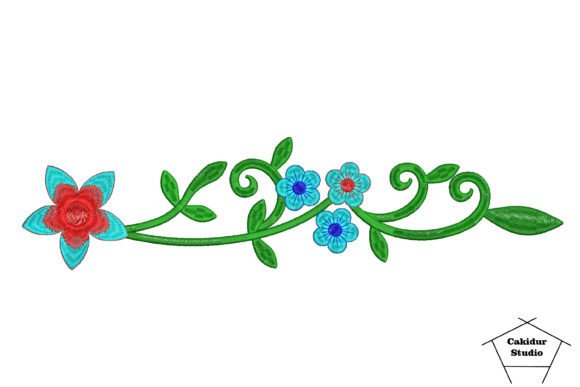
When I opened the Three Twigs Border embroidery file, what struck me wasn’t just its floral charm—but its quiet confidence. It’s not fussy or overwrought. Three slender, slightly asymmetrical branches curl gently along a horizontal line, each carrying tiny buds and subtle leaves. There’s breathing room between elements, no visual crowding. It reads as botanical, not baroque; refined, not rigid. This isn’t a border that shouts—it invites a second look. That makes it ideal for handmade products where subtlety builds perceived value: think linen tea towels for a boutique kitchen line, or the hem of a baby blanket meant to feel heirloom-soft, not craft-store loud.
Real-Life Test: The Tote Bag That Sold Before It Was Finished
Last week, I stitched Three Twigs Border along the bottom edge of an organic cotton tote—intended for a local florist’s gift set. I used a medium-weight cutaway stabilizer, 40-weight cotton thread in sage and cream, and hooped the fabric with gentle tension. What surprised me wasn’t how well it stitched (it did—clean satin stitch on stems, soft fill stitch on leaves), but how instantly *finished* the bag felt. Customers at the pop-up stall kept running their fingers along the border, commenting on its “grown-up gentleness.” One asked if it was hand-embroidered. That’s the signal: when machine embroidery reads as intentional craftsmanship, not digital filler, you’ve chosen right.
Where It Shines—and Where It Asks for Care
Three Twigs Border excels on stable, medium-weight fabrics: canvas totes, brushed cotton sweatshirts, linen pillow covers, denim aprons. Its open layout handles texture well—no dense fill zones that flatten burlap or obscure terry cloth loops. On a structured cap visor? Possible, but only with precise digitizing and careful hooping—the curve compresses the outermost twig, so test first. On thin jersey or stretchy knits? Proceed with caution: use tear-away + lightweight cutaway, reduce top tension slightly, and avoid placing near seams or high-movement areas like sleeve hems.
Dark fabrics? It holds up beautifully—if your thread contrast is intentional. I ran it in charcoal gray on navy chambray and got elegant depth, not muddiness. But on black velvet? Skip the lightest leaf details unless you’re willing to add a second pass or switch to metallic thread for lift. And while it’s lovely on holiday kitchen towels, remember: dense satin-stitched stems won’t survive heavy commercial laundering unless stabilized properly. For baby embroidery or personalized gifts meant to be washed weekly, reinforce with a light fusible backing *under* the stabilizer—not just on top.
Design Integrity Meets Business Sense
This isn’t just about prettiness. As a designer who supplies embroidery files to Etsy sellers and small shops, I judge borders by how they support brand voice—not drown it. Three Twigs Border works because it’s adaptable without being generic. Pair it with clean sans-serif monogramming for modern bridal robes, or layer it beneath a vintage-style floral motif for cottage-core nursery decor. It doesn’t compete—it frames. That elevates your finished product: a tea towel feels curated, not assembled; a custom sweatshirt reads boutique, not big-box.
For craft business owners, that translates directly to trust. When customers see consistent, well-executed borders across your listings—on patches, pillow covers, even printable mockups—they subconsciously associate your shop with attention to detail. No one buys a $48 embroidered apron for the fabric alone. They buy the feeling that someone *chose* this detail, tested it, cared.
Practical Designer Notes You’ll Actually Use
- Always test on scrap fabric first—especially if using textured weaves or dark backgrounds. Stitch density matters more than you think in open designs like this.
- Check thread color contrast in natural light, not just screen glow. Sage on oat linen looks warm on monitor, cooler in person.
- Confirm hoop size compatibility before prepping client work. If your machine requires frequent rehooping mid-border, consider splitting the design into two segments for smoother flow.
- Inspect small details under magnification: those tiny buds should hold shape on 60-count linen but may blur on coarse burlap.
- Test black-and-white mockups—this design relies on tonal variation, not just color. If it flattens in grayscale, adjust thread values.
- Use proper stabilizer: medium cutaway for knits, tear-away for stable wovens, and always float a lightweight layer for delicate fabrics like voile.
- Verify licensing terms before selling finished items or bundling Three Twigs Border into digital embroidery kits. Commercial use isn’t automatic—even for borders.
Final Thought: A Border That Belongs
Not every embroidery file earns a permanent spot in my working library. Three Twigs Border does—because it solves real problems. It adds quiet sophistication without demanding perfection from the embroiderer. It flatters fabric instead of fighting it. And whether you’re stitching a single personalized gift or scaling production for your Etsy shop, it delivers consistency without repetition. In an era where handmade means *meaningful*, this border doesn’t decorate—it connects. Just make sure you’ve tested it, stabilized it, and trusted your eye before sending it out into the world. That’s how good design becomes great product.