Feather: Elegant Floral Embroidery for Craft Fairs
First Impression: Delicate, Premium, and Instantly Recognizable
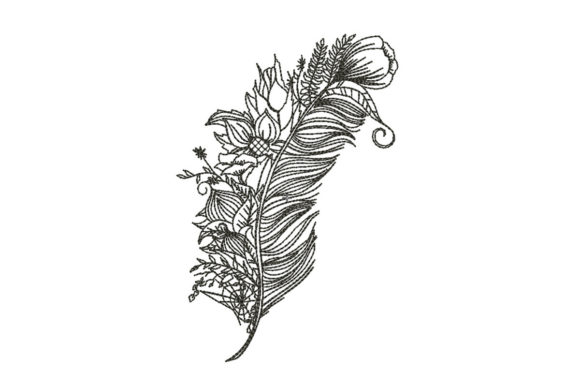
Feather lands with quiet confidence—not loud, not trendy, but elegant and delicate. As an embroidery designer who’s curated over 200 craft fair booths, I can tell you this: Feather reads as premium the moment a customer glances at your table. It’s not farmhouse rustic or playful cartoon—it’s soft botanical sophistication. That floral feather motif bridges nature and refinement, making it ideal for buyers seeking handmade quality without fussiness. It feels intentional, not generic—exactly what sets apart a standout tote bag from a forgettable one.
Where Feather Shines on Craft Fair Products
Feather isn’t a one-size-fits-all design—but it’s a *multi-surface* winner when placed intentionally:
- Pillow covers: Its vertical flow and organic shape anchor center-front placement beautifully. Customers consistently pause longer at pillow displays where Feather is stitched in ivory thread on oat linen—no extra embellishment needed.
- Tea towel embroidery: On tightly woven cotton towels, Feather’s fine lines stay crisp. It avoids the “blobby” look that plagues dense floral motifs—thanks to balanced stitch density and open negative space.
- Embroidered patches: Feather scales down cleanly to 3–4 inches. As a sew-on or iron-on patch, it adds artisanal charm to denim jackets, market bags, and kids’ backpacks—without overwhelming the base fabric.
- Tote bag design: Centered on the lower third of a natural canvas tote, Feather reads as a signature detail—not filler. It elevates the whole piece, helping justify a $38–$48 price point.
- Apron embroidery: Positioned just above the pocket (not centered on the bib), it adds subtle personality while staying practical and wash-durable.
It’s less effective on curved surfaces like caps—unless resized and re-digitized for low-profile stitching—and doesn’t translate well to ultra-textured fabrics like heavy burlap or terry cloth towels, where delicate stems and feather barbs risk blurring.
What Makes Feather Sell—Beyond the Stitch
Feather works because it’s visually legible at three feet. At a crowded craft fair, customers don’t stop to read descriptions—they respond to mood and clarity. Feather delivers both: its silhouette reads instantly as “feather,” while the floral integration hints at craftsmanship. That duality builds perceived value fast.
For Etsy sellers and small shop owners, Feather photographs exceptionally well—especially flat-lay shots on neutral backdrops. Its light-to-dark tonal range gives depth in natural lighting, and it holds up beautifully in printable mockups used for listings or social ads. No over-editing required.
As a machine embroidery design, Feather supports batch production without fatigue. The motif repeats cleanly across sizes (small accent → medium focal point), and its consistent line weight means fewer thread breaks or tension issues during long runs—critical when embroidering 40+ tea towels before Saturday morning.
Careful-Use Notes Every Designer Should Check
Even elegant designs have limits. Before cutting into your best linen or listing Feather on Etsy:
- Avoid dense stitch areas on dark fabric: Fine floral details can visually sink into navy or charcoal unless thread contrast is high—test with ecru or pale gold thread on black cotton.
- Watch tiny details on textured towels: Looped terry or waffle-weave kitchen towels soften fine stem lines. Opt for tighter-woven cotton or linen for clarity.
- Don’t shrink Feather below 2.5 inches: Petal tips and feather filaments lose definition. If you need a micro version, request a simplified variant from the designer—or digitize one yourself.
- Stabilizer matters more here than usual: Feather’s graceful curves demand cutaway or tear-away stabilizer—especially on lightweight fabrics like rayon challis or silk-blend pillow covers.
- Curved cap surfaces distort vertical motifs: Feather’s height-to-width ratio makes it unstable on front panels unless re-hooped with precise underlay and reduced density.
Design Integrity Meets Booth Impact
Feather strengthens brand consistency when used across complementary products: same thread palette (e.g., sage, dove gray, cream), same hoop size (5x7 recommended minimum), same stabilizer protocol. That cohesion tells customers you’re a serious maker—not a one-off crafter.
In person, Feather draws attention without shouting. It pairs seamlessly with other Birds category pieces—but stands strongest alone. At my last fair, a single pillow cover with Feather sold within 12 minutes, followed by four requests for matching tea towels. Why? Because it looked *finished*, not DIY.
For digital embroidery file sellers, Feather is a strong anchor design—it invites add-ons (matching border files, coordinating monogram fonts, seasonal color palettes). For boutique makers, it’s a reliable “hero” item that anchors a display and justifies higher margins.
Practical Embroidery Designer Notes
Before launching Feather into production:
- Test the embroidery file on scrap fabric matching your final product—same weight, weave, and pre-wash status.
- Check thread colors against your chosen fabric swatches under both daylight and booth lighting.
- Review spacing between feather filaments and floral elements—tight gaps may merge on looser weaves.
- Confirm hoop size compatibility with your machine; if using multi-needle setups, verify jump stitch placement.
- Inspect stitch density—especially along curved petal edges—to avoid puckering on delicate fabrics.
- Use appropriate stabilizer: cutaway for knits, tear-away for stable wovens, and water-soluble for sheer overlays.
- Create at least one real mockup—not just a digital preview—before ordering bulk fabric.
- Compare how Feather reads on light vs. dark fabric bases; adjust thread choices accordingly.
- Verify commercial licensing terms before selling finished products—this is non-negotiable for Etsy sellers and wholesale partners.
Feather isn’t flashy—but in the handmade marketplace, elegance sells steadily, season after season. When stitched with intention, it transforms everyday items into heirloom-adjacent keepsakes. And that’s exactly what craft fair buyers are reaching for.