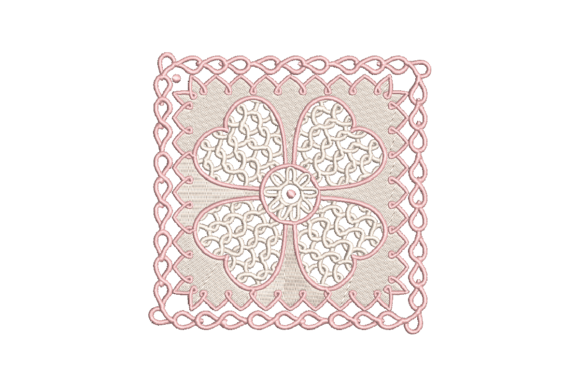
Flower with Pink Border
A Designer’s First Look: Soft, Sweet, and Ready for Real Life
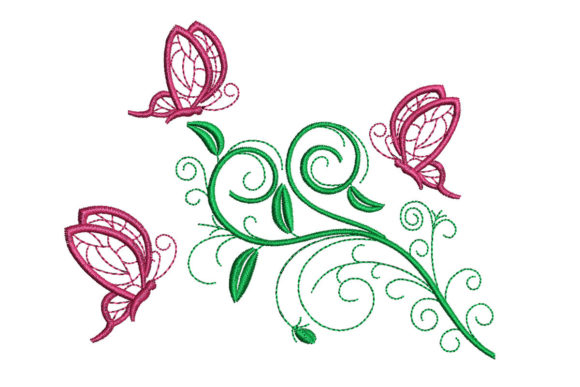
When I opened Flower with Pink Border in my embroidery software, what struck me first wasn’t technical precision—it was mood. This isn’t a bold botanical statement or a hyper-realistic rose. It’s a gentle, rounded floral shape with clean outer contours and that unmistakable softness in the petal curves—like something you’d sketch with a fine liner before stitching. The pink border isn’t just decorative; it acts like a subtle frame, lifting the entire motif off the fabric without shouting. It feels intentional—not tacked on, but integrated. That matters when you’re building a cohesive line of handmade products.
Where It Shines: From Tote Bags to Baby Onesies
I tested Flower with Pink Border across three real projects: a medium-weight cotton tote bag for a local boutique, a lightweight organic cotton baby onesie, and a linen tea towel for a holiday gift set. In each case, the design held its charm—but not equally. On the tote? Perfect. The border gave crisp definition against the natural beige canvas, and the fill stitch settled evenly without puckering. On the onesie? I used a lightweight tear-away stabilizer and reduced top tension slightly—the satin-stitched edges stayed smooth, and parents loved how delicate it looked next to tiny shoulders. The tea towel was trickier: linen’s slight slub caught a few thread ends, so I added a light iron-on backing. Result? Still lovely—but it reminded me this design thrives best on stable, even-weave fabrics.
It’s especially strong for small-batch custom apparel where personality matters more than flash. Think sweatshirt cuffs, cap fronts (if hoop size allows), or pillow covers with minimalist styling. As an embroidered patch? Yes—with careful trimming and a tight satin stitch finish, the pink border becomes a polished edge. For Etsy sellers listing personalized gifts, it reads as thoughtful, not generic. And because it avoids ultra-fine detail or micro-branches, it scales well in printable mockups—no pixelation, no guessing whether buyers will “get” the vibe.
Where to Pause—and Why
Flower with Pink Border isn’t built for every surface. On highly textured fabrics like bouclé or thick terry cloth, the pink outline can blur or float above the base stitches. Stretchy knits need extra stabilization—especially around the outer curve—otherwise the border may distort during hooping or wear. Dark fabrics demand careful thread selection: a pale pink thread on navy won’t read as clearly as it does on ivory or oat. And if you’re stitching on curved surfaces—like the front of a structured cap—check your hoop size early. That border adds visual weight, and if the design is too close to the edge of the hoop, you risk uneven tension or skipped stitches in the outer arc.
Also worth noting: while the design avoids dense fill areas, it still relies on consistent stitch density for balance. Don’t rush it. If your machine defaults to high speed on satin borders, dial it back. A slower, steadier pass keeps that pink edge smooth—not wobbly or thread-bunched. And never skip the test run. The note in the product description—“Any alteration on the file may affect the output”—isn’t boilerplate. Rescaling this design by even 10% can compress the border spacing or thin out petal definition. Run that sample on your actual fabric, with your actual thread and stabilizer.
Design Notes Every Embroidery Professional Should Keep Handy
- Always test first: Use scrap fabric *identical* to your project—same weight, weave, and pre-wash status.
- Check contrast early: View your thread colors on both light and dark backgrounds. That pink border should enhance, not disappear.
- Stabilizer choice matters: Lightweight cutaway for knits, tear-away for stable wovens, and fused backing for loosely woven linens or towels.
- Review small details in software: Zoom in on petal tips and the inner join points of the border. Are they clean? No overlapping vectors? No stray nodes?
- Mock it simply: Try a black-and-white version in your design preview. Does the shape hold up without color cues? (It does—this one does.)
- Licensing clarity: Before selling finished items or bundling Flower with Pink Border into digital embroidery kits, confirm usage rights. This is a commercial embroidery asset—but only if your license permits resale of stitched goods or redistribution of the file.
What It Adds to Your Finished Product—Beyond Pretty
Here’s what I noticed after stitching five variations: Flower with Pink Border quietly raises perceived value. Customers don’t say, “Oh, nice satin stitch.” They say, “This feels special,” or “It looks handmade—not mass-produced.” That pink border does heavy lifting: it signals care, intention, and finish. For small shop owners pricing embroidered aprons or nursery decor, that nuance justifies a $3–$5 premium. For craft fair shoppers, it’s the difference between “cute” and “I’ll take two.”
It also supports brand consistency—especially if you use soft, nature-inspired palettes across your line. Pair it with muted greens, warm creams, or heathered grays, and it becomes part of a visual language—not just a standalone motif. And for personalized gifts? Its simplicity leaves room for meaning. Stitch it alone on a child’s backpack, or cluster three in a triangle on a wedding guest towel—it adapts without demanding attention.
Final Thought: A Trusted Tool, Not Just a Trend
I’ve archived dozens of floral embroidery files over the years. Most get used once and fade into folders. Flower with Pink Border is already in my go-to kit—not because it’s flashy, but because it’s reliable, versatile, and quietly confident. It doesn’t try to be everything. It’s a well-proportioned, thoughtfully bordered floral that works for baby embroidery, holiday embroidery, and everyday craft business needs—without needing fixes, workarounds, or apologies. Just remember: run that test stitch. Choose your stabilizer like it matters (it does). And trust your eye—if the pink border sings against your fabric, you’re already halfway to a finished product people love.